
The Complete Guide to Solar Panel Cleaning: How to Wash Safely Without Stepping on Your Modules
Introduction
Solar panels are a significant investment that can provide clean energy for 25-30 years or more. However, like any outdoor equipment, they require proper maintenance to perform at their best. Dirty solar panels can lose significant efficiency, with some studies showing up to 25% reduction in energy production. Regular cleaning is essential, but it must be done correctly to avoid damaging your investment.
This comprehensive guide will teach you how to properly wash your solar panels while emphasizing one critical rule: never step on your solar modules.
Why You Should NEVER Step on Solar Panels
The Hidden Danger of Microcracks
While solar panels may look sturdy and the glass surface appears solid, stepping on them can cause catastrophic damage that isn’t immediately visible. The glass surface may appear unchanged, yet pressure from a footstep can cause tiny fractures inside the photovoltaic cells 10. These microcracks are particularly dangerous because:
- They’re Invisible: You often can’t see microcracks with the naked eye
- They Spread Over Time: What starts as a tiny fracture can expand with temperature changes and weather exposure
- They Reduce Efficiency: Walking on solar panels can potentially damage the electrical connections, leading to reduced efficiency or even system failure 11
- They Void Warranties: Most manufacturers explicitly prohibit walking on panels, and doing so can void your warranty
Structural Integrity Concerns
Stepping on solar panels is not recommended; it can create microcracks which may damage efficiency and lifespan 13. Even if you’re careful and try to step on the frame or edges, the pressure distribution can still damage the delicate silicon cells inside.
When to Clean Your Solar Panels
Frequency Recommendations
- Standard cleaning: Every 6-12 months for most residential installations 27
- Dusty environments: Every 3-6 months if you live in a dusty area
- After major events: Clean after dust storms, heavy pollen seasons, or significant bird activity
- Annual inspection: Get a full professional inspection once a year 27
Signs Your Panels Need Cleaning
- Visible dirt, dust, or debris accumulation
- Bird droppings or tree sap
- Noticeable decrease in energy production
- Water spots or mineral deposits
- Pollen buildup (especially in spring)
Safety First: Preparing to Clean
1. Choose the Right Time and Weather
Best Practices:
- Clean early morning, late afternoon, or on cloudy days
- Never clean hot panels in direct sunlight (thermal shock can crack the glass)
- Avoid cleaning in windy conditions
- Don’t clean when rain is expected within a few hours
2. Shut Down Your System
Critical Safety Step: Always shut off your solar system before cleaning 15. Follow these steps:
- Turn off the inverter using the manufacturer’s shutdown procedure
- Switch off the AC disconnect (usually located near the inverter)
- Turn off the DC disconnect if your system has one
- Wait at least 5 minutes for the system to fully discharge
3. Gather Proper Safety Equipment
Personal Protective Equipment (PPE):
- Non-slip shoes with good traction
- Safety harness if working on a roof
- Gloves to protect your hands and avoid leaving fingerprints 15
- Safety glasses
- Hard hat (if working under panels)
Important: Please do not get on the roof to clean your panels unless you have proper safety equipment and training 20. Getting up on the roof can be dangerous without the proper safety precautions.
Proper Cleaning Methods: Step-by-Step Guide
Tools and Materials You’ll Need
✅ Recommended:
- Soft-bristled brush or sponge (non-abrasive)
- Garden hose with spray nozzle
- Bucket
- Mild, non-abrasive soap (optional)
- Soft, lint-free cloth or squeegee
- De-ionized or soft water (less than 250 ppm) 19
❌ Never Use:
- Pressure washers (high pressure can damage panels) 23
- Abrasive cleaners or scrubbing pads
- Harsh chemicals, acids, or alkali detergents 18
- Metal tools or scrapers
- Hot water on hot panels
Step-by-Step Cleaning Process
Step 1: Initial Inspection
Before you begin, inspect your panels from the ground using binoculars if necessary. Look for:
- Visible damage or cracks
- Loose mounting hardware
- Areas with heavy debris buildup
- Bird nests or pest activity
Step 2: Gentle Pre-Rinse
Gently rinse panels with water using a garden hose on a gentle setting 26. This removes loose dirt and debris before scrubbing. Start from the top and work downward.
Important: Avoid using high-pressure washers as they can damage the solar panels and force water into electrical connections 26.
Step 3: Apply Cleaning Solution
If your panels need more than a rinse:
- Fill a bucket with water and a small amount of mild detergent 2
- Some owners recommend mixing a few cups of vinegar into a bucket of water for stubborn spots 4
- Note: Most manufacturers recommend using just water without soap in most circumstances 17
Step 4: Gentle Cleaning
Start on a low section first to practice your technique 4:
- Use a soft brush or rag with gentle, circular motions 4
- Start from the top and work your way down
- Apply minimal pressure—let the brush do the work
- Pay extra attention to areas with bird droppings or stubborn dirt
- Never stand or kneel on the panels
Step 5: Thorough Rinsing
Rinse thoroughly with clean water to remove all soap residue 4. Soap left on the panels can:
- Create streaks that reduce efficiency
- Attract more dirt
- Potentially damage the anti-reflective coating
Step 6: Drying (Optional)
While panels will air dry, you can:
- Use a soft squeegee to remove excess water
- Wipe with a lint-free cloth to prevent water spots
- Work quickly to avoid streaks
How to Clean Without Stepping on Panels: Safe Access Methods
Method 1: Ground-Level Cleaning (Safest)
For single-story homes or ground-mounted systems:
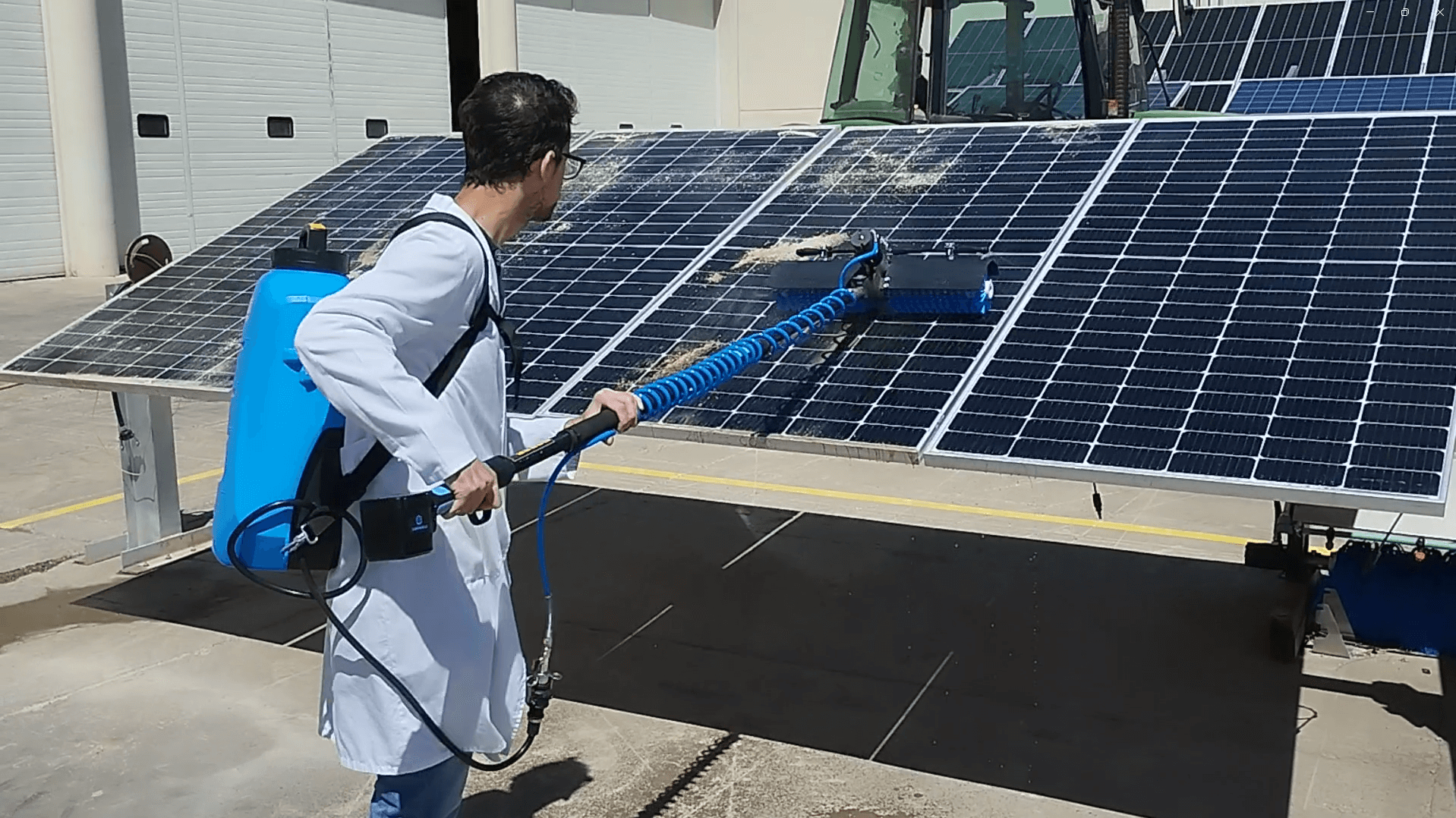
- Use an extension pole with a soft brush attachment
- Extendable poles can reach 15-40 feet
- Stand safely on the ground while cleaning
- This eliminates all risk of falling or stepping on panels
Method 2: Ladder Access
For panels within reach from a ladder:
- Use a steady ladder positioned on stable ground 19
- Have someone hold the ladder for stability
- Never lean directly on the panels
- Use extension tools to reach panels without climbing onto the roof
- Keep your body weight centered on the ladder, not the roof
Method 3: Roof Access (Only If Necessary)
If you must access the roof:
- Use proper fall protection including harness and anchor points
- Walk only on designated roof walkways or catwalks
- Step only on roof rafters or structural supports—never on the panels
- Use crawl boards or roof ladders to distribute your weight
- Stay at least 2-3 feet away from panel edges
- If you have to walk on the array, stepping on the clamp reduces potential for microcracking, but this should still be avoided if possible 8
Method 4: Professional Cleaning Services
When to call professionals:
- Multi-story buildings
- Steep roof pitches
- Large commercial installations
- If you’re uncomfortable with heights
- For warranty-compliant cleaning
Benefits: Professionals have specialized equipment, safety training, and experience cleaning solar panels without causing damage.
Special Cleaning Situations
Removing Stubborn Stains
Bird Droppings:
- Rinse immediately with plenty of water 18
- Soak with water for a few minutes to soften
- Gently brush away—don’t scrub hard
- Repeat if necessary
Tree Sap or Tar:
- Apply warm (not hot) water to soften
- Use a plastic scraper very gently if needed
- Never use chemical solvents
Hard Water Stains:
- Use a vinegar-water solution (1 part vinegar to 4 parts water)
- Rinse thoroughly afterward
- Consider installing a water softener for future cleanings
Pollen:
- Clean more frequently during pollen season
- Use gentle rinsing to avoid spreading pollen
- Clean early morning when pollen is less sticky
Cleaning in Different Seasons
Spring: Remove pollen and winter debris Summer: Clean early morning or evening to avoid heat Fall: Clear leaves and prepare for shorter days Winter: Remove snow carefully with a soft roof rake (never use metal tools)
Dos and Don’ts Quick Reference
✅ DO:
- ✓ Clean regularly (every 6-12 months) 25
- ✓ Turn off the system before cleaning 15
- ✓ Use soft water with less than 250 ppm 19
- ✓ Use a soft brush or sponge 1
- ✓ Rinse thoroughly after cleaning
- ✓ Inspect panels regularly for damage
- ✓ Document cleaning dates and any issues
- ✓ Wear appropriate safety gear
❌ DON’T:
- Step or walk on solar panels 13
- ✗ Use pressure washers 23
- ✗ Use abrasive cleaners or harsh chemicals 18
- ✗ Clean hot panels in direct sunlight
- ✗ Use metal tools or scrapers
- ✗ Ignore manufacturer guidelines
- ✗ Clean in windy or rainy conditions
- ✗ Stand on the roof without proper safety equipment 20
Maintenance Beyond Cleaning
Regular Inspections
In addition to cleaning, perform these checks:
Monthly (from ground):
- Visual inspection for obvious debris
- Monitor energy production for unusual drops
- Check for shading from new tree growth
Annually:
- Professional inspection recommended once every five to ten years while the system is performing well 16
- Check mounting hardware for tightness
- Inspect electrical connections
- Look for signs of corrosion or wear
- Verify inverter operation
Monitoring Performance
Most modern solar systems include monitoring software. Watch for:
- Sudden drops in production (may indicate damage)
- Gradual decline (may indicate dirt buildup)
- Individual panel underperformance (may indicate microcracks)
Cost Considerations
DIY Cleaning Costs
- Basic supplies: $50-100 (brush, pole, bucket)
- Water: Minimal cost
- Time: 1-3 hours depending on system size
- Risk: Potential for injury or damage if not done properly
Professional Cleaning Costs
- Residential: $150-400 per cleaning
- Commercial: Varies by size
- Frequency: 1-2 times per year recommended
- Benefits: Safety, warranty compliance, expertise
ROI Consideration: Clean panels can produce 15-25% more energy, often paying for cleaning costs through increased production.
Warranty and Insurance Implications
Manufacturer Warranties
Most solar panel warranties (typically 25 years) require:
- Proper maintenance including regular cleaning
- No physical damage from stepping on panels
- Professional installation and repairs
- Documentation of maintenance
Warning: Stepping on panels and causing microcracks can void your warranty, leaving you responsible for replacement costs.
Insurance Coverage
- Regular maintenance is typically required for coverage
- Damage from improper cleaning may not be covered
- Document all cleaning and maintenance activities
- Take photos before and after cleaning
Environmental Considerations
Water Conservation
- Use a bucket instead of running hose continuously
- Collect rainwater for cleaning
- Clean during cooler times to reduce evaporation
- Consider waterless cleaning methods for light dust
Eco-Friendly Cleaning Solutions
- Use biodegradable, phosphate-free soap if needed
- Vinegar and water solution is effective and environmentally safe
- Avoid harsh chemicals that can run off into soil
- De-ionized water is often sufficient 17
Troubleshooting Common Problems
Problem: Persistent Low Production After Cleaning
Possible Causes:
- Microcracks from previous stepping damage
- Shading issues
- Inverter problems
- Actual panel degradation
Solution: Contact a professional for diagnostic testing
Problem: Water Spots After Cleaning
Prevention:
- Use de-ionized or softened water
- Dry panels immediately after rinsing
- Clean on cloudy days to slow drying
- Use a squeegee for streak-free finish
Problem: Can’t Reach All Panels Safely
Solution: Hire professional cleaners with proper equipment. It’s not worth the risk of injury or damage.
Conclusion: Protect Your Investment
Solar panels are designed to last decades, but they require proper care to maintain their efficiency and longevity. The most important rule to remember is: never step on your solar panels. The risk of creating invisible microcracks that reduce efficiency and void warranties is simply not worth it.
Key Takeaways:
- Clean regularly but safely—every 6-12 months is typically sufficient 25
- Never walk on panels—use extension tools or hire professionals 13
- Use gentle methods—soft brushes, mild soap, and low-pressure water 26
- Prioritize safety—turn off the system, use PPE, and don’t take risks 15
- Know your limits—if you can’t safely reach your panels, call a professional 20
By following these guidelines, you’ll maximize your solar panel efficiency, extend their lifespan, and protect your investment for years to come. Remember: when in doubt, hire a professional. The cost of professional cleaning is far less than replacing damaged panels or dealing with reduced energy production from microcracks.
Your solar panels are working hard to provide clean energy for your home—treat them with care, and they’ll reward you with decades of reliable service.
