
The Saboteur’s Smile: When Incompetence Masks Malice
By : Khawar Nehal
Date : 27 June 2026
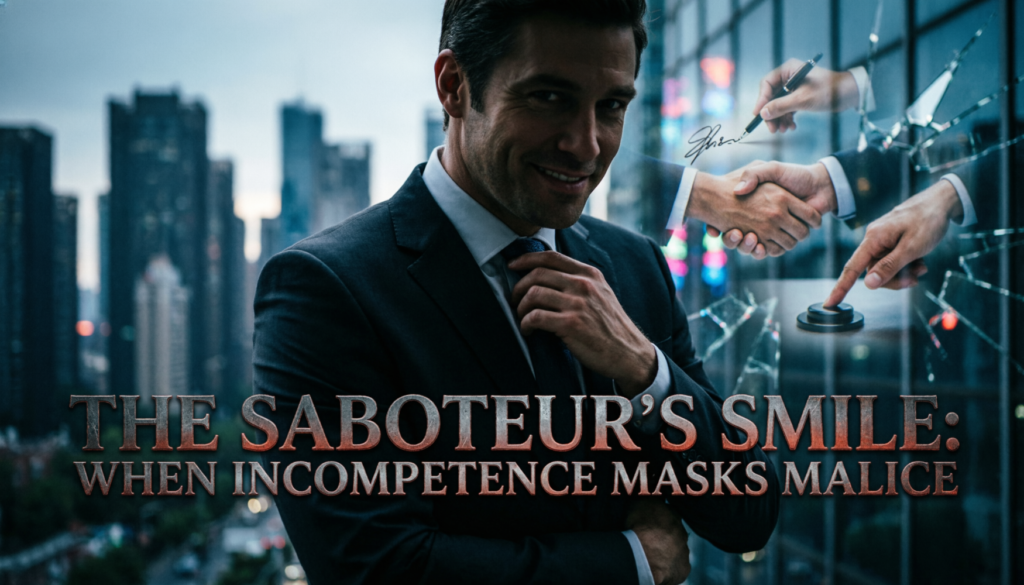
There is a subset of individuals who are not merely confused or suffering from the Dunning-Kruger effect. They are actively hostile to expertise because expertise is a threat to their agenda.
These people do not ask stupid questions to learn. They do not argue out of genuine conviction. They create confusion, noise, and bureaucratic friction for one specific reason: to drive the expert away so they can operate in the shadows.
The Strategy of “Weaponized Incompetence”
In corporate environments, project teams, and even scientific collaborations, there are those who feel exposed by the presence of someone who actually knows how things work. An expert brings clarity. Clarity brings accountability. And accountability is the enemy of those who are cutting corners, stealing resources, or hiding failures.
To neutralize the expert, they employ a tactic known as weaponized incompetence:
- Feigning Ignorance: They ask endless, circular questions about basic concepts they should already know, draining the expert’s time and patience.
- Manufacturing Complexity: They insist on unnecessary steps, meetings, or approvals, creating a maze so tangled that the expert eventually gives up.
- Challenging Credibility: They subtly undermine the expert’s authority by pointing out minor, irrelevant errors or demanding proof of the obvious.
Why They Want the Expert Gone
The goal is not to win the argument; the goal is to remove the witness.
- Hiding Theft: Whether it’s embezzling funds, stealing intellectual property, or misappropriating resources, an expert’s oversight makes these activities difficult. By making the expert’s life miserable, they hope the expert will withdraw, leaving the books unexamined.
- Covering Up Negligence: If a project is failing due to their laziness or poor decisions, an expert will identify the root cause. By confusing the narrative, they can blame “complexity” or “external factors” instead of their own incompetence.
- Maintaining Control: In many organizations, power is held by those who control information. An expert who simplifies and clarifies disrupts this power dynamic. They want to remain the “gatekeepers” of knowledge, even if they don’t understand it themselves.
The Expert’s Trap
The tragedy is that experts often fall into this trap because they believe in good faith. They think, “If I just explain it better, they will understand.” They do not realize that the other party does not want to understand. They want the expert to leave.
Every hour spent answering a useless question is an hour not spent auditing the books, reviewing the code, or checking the infrastructure. It is a distraction tactic, pure and simple.
Recognizing the Red Flags
How do you know if you are dealing with a confused learner or a malicious saboteur?
- They never apply the advice. You give a clear solution, and they ignore it, then ask the same question again next week.
- They resist documentation. They prefer verbal, off-the-record conversations where nothing is written down.
- They isolate you. They try to keep you away from other stakeholders or decision-makers.
- They escalate trivialities. They make a huge fuss over minor issues while ignoring major, critical failures.
The Only Winning Move Is Not to Play
If you suspect someone is using confusion to hide malice, do not engage.
- Document Everything: Keep a strict record of all interactions, decisions, and advice given. Make it impossible for them to twist your words.
- Escalate Transparently: Bring the issue to light with higher authorities or partners. Use your “Trust but Verify” model. Show the data. Show the discrepancies.
- Withdraw Gracefully: If the environment is toxic and protected by bad actors, leave. Do not try to save a system that is designed to fail. Your expertise is too valuable to be wasted on protecting thieves.
Conclusion
Not all ignorance is innocent. Some stupidity is a shield for corruption. When someone asks useless questions to confuse you, ask yourself: What are they trying to hide?
If the answer is theft, negligence, or fraud, then your silence is not rude—it is strategic. Protect your integrity, document the truth, and let them rot in the confusion they created. Experts are there to build, not to be used as cover for those who destroy.
