
The Boeing 777: The “Triple Seven” That Changed Aviation Forever
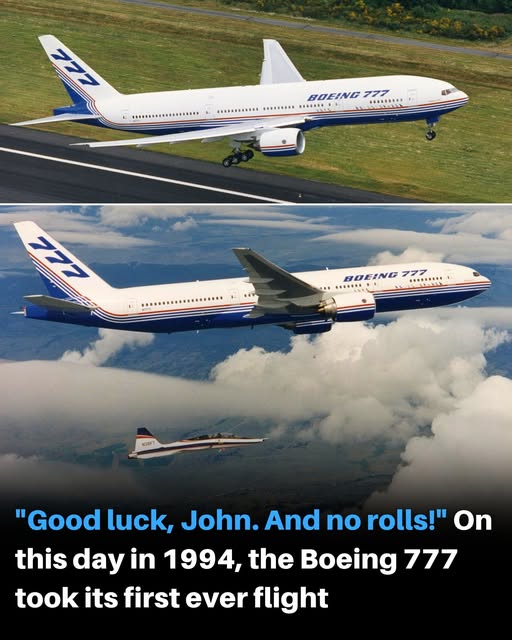
The Boeing 777, affectionately known in the industry as the “Triple Seven,” stands as one of the most significant achievements in commercial aviation history. As the world’s first commercial aircraft designed entirely using computer-aided design (CAD), it bridged the gap between mid-size widebodies and massive jumbo jets, redefining long-haul travel for decades. From its maiden flight on June 12, 1994, to becoming the best-selling long-haul widebody aircraft, the 777 has carried billions of passengers across the globe.
Origins and Development
In the early 1990s, Boeing identified a market gap between its smaller 767 and the colossal 747. Airlines needed a twin-engine jet capable of flying long routes over oceans with the capacity of a larger aircraft but lower operating costs. Launched in October 1990 with an order from United Airlines, the 777 was developed with unprecedented collaboration from eight major airlines, including British Airways, Cathay Pacific, and Japan Airlines, ensuring the design met real-world operational needs.
Construction of the first prototype began on January 4, 1993, at Boeing’s expanded Everett Factory in Washington. The aircraft was unveiled in April 1994 and took to the skies just two months later on June 12, 1994, under the command of chief test pilot John E. Cashman. This inaugural flight lasted 3 hours and 48 minutes, marking the start of an intensive 11-month flight test program. Following certification, the first production 777-200 was delivered to United Airlines on May 15, 1995, entering commercial service on June 7, 1995.
Revolutionary Design and Technology
The 777 was a technological leap forward. It was the first airliner designed 100% digitally using CATIA software, eliminating the need for physical mockups and significantly reducing engineering errors and rework. Key design features include:
- Six-Wheel Main Landing Gear: To distribute the immense weight of the aircraft without requiring additional landing gear struts.
- Fly-by-Wire Controls: The 777 was Boeing’s first fly-by-wire commercial aircraft, offering enhanced safety and handling precision.
- Massive Engines: It introduced the largest-diameter turbofan engines ever fitted to a commercial aircraft, with options from General Electric, Pratt & Whitney, and Rolls-Royce.
- Composite Materials: While primarily aluminum, the 777 utilized advanced composites for approximately 10% of its structure, paving the way for future all-composite airframes.
Variants and Evolution
The 777 family has evolved through several generations to meet diverse airline needs:
The Classics (777-200, -200ER, -300)
The original 777-200 was the baseline model. The Extended Range (-200ER) variant followed, featuring increased fuel capacity and higher takeoff weights, powered by engines like the GE90-94B or Rolls-Royce Trent 895. The stretched 777-300 offered higher passenger capacity for high-density routes, serving as a direct replacement for aging 747s on domestic and regional international flights.
The Long-Range Leaders (777-200LR & 777-300ER)
Launched in the early 2000s, these variants transformed global connectivity. The 777-300ER became the family’s bestseller, thanks to its raked wingtips, strengthened landing gear, and powerful GE90-115B engines. The 777-200LR Worldliner set the record for the longest non-stop flight by a commercial aircraft, covering 11,664 nautical miles from Hong Kong to London in 2005.
The Next Generation (777X)
The upcoming 777X series (777-8 and 777-9) features folding wingtips—a first for commercial jets—to fit existing airport gates despite a massive 71.8-meter wingspan. Powered by the new GE9X engine, the most efficient jet engine in its class, the 777X promises further reductions in fuel burn and emissions.
Commercial Success and Legacy
As of recent counts, over 1,700 Boeing 777s have been built, making it one of the most successful widebody programs in history. Emirates is the largest operator, with nearly 300 aircraft in its fleet and hundreds more on order for the 777X. The aircraft’s reliability and range enabled the proliferation of point-to-point long-haul routes, reducing reliance on hub-and-spoke models dominated by four-engine jets.
Thirty years after entering service, the 777 remains a cornerstone of global aviation, celebrated for its superior range, outstanding fuel efficiency, and passenger comfort. Its legacy continues as the 777X prepares to carry the torch into a new era of sustainable long-haul flight.
