The Learning Pyramid
The learning pyramid, also known as the "cone of
learning" or "cone of experience," is a visual representation of
different methods of learning and their effectiveness in
retaining information over time. While the exact percentages
associated with each method can vary depending on the source and
context, the general concept remains consistent. One of the
methods often included in the learning pyramid is teaching
others, which is considered one of the most effective ways to
solidify one's understanding of a topic.
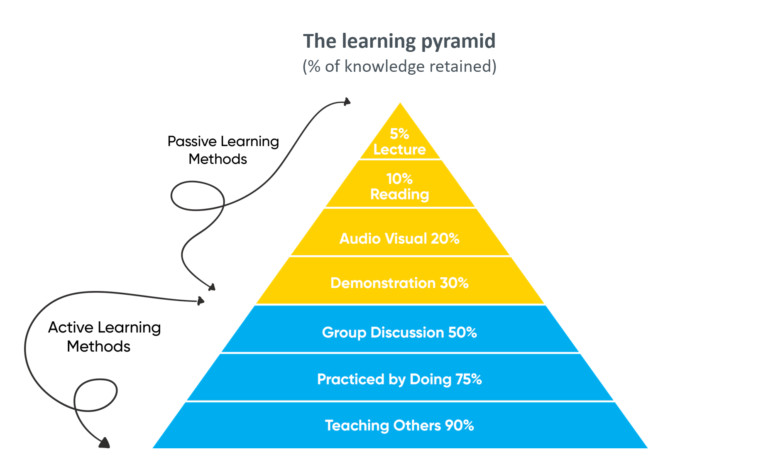
Levels of the Learning Pyramid
Lecture
Lectures involve passive listening to an instructor presenting information. Retention rates are typically low, as this method relies heavily on auditory learning with minimal interaction.
Reading
Reading involves actively engaging with written material. Learners can digest information at their own pace and revisit concepts as needed, leading to slightly better retention.
Audio-Visual
Includes watching videos, presentations, or demonstrations. Combining auditory and visual elements makes this method more engaging and memorable.
Demonstration
Observing someone perform a task provides visual and sometimes hands-on context, allowing learners to see concepts in action.
Discussion
Active participation in group conversations encourages critical thinking, collaboration, and idea exchange, significantly boosting retention.
Practice by Doing
Also known as experiential learning, this involves hands-on activities or simulations, allowing learners to apply knowledge in real-world scenarios.
Teaching Others
Explaining concepts to someone else requires deep understanding, clear articulation, and anticipation of questions—making it the most effective learning method.
Summary
The learning pyramid suggests that actively engaging with material—through discussions, hands-on practice, and especially teaching others—leads to significantly higher retention compared to passive methods like lectures or reading. Teaching others, in particular, is highlighted as an extremely effective way to solidify understanding and retain information in the long term.